Research
An option before expiration is not its payoff diagram
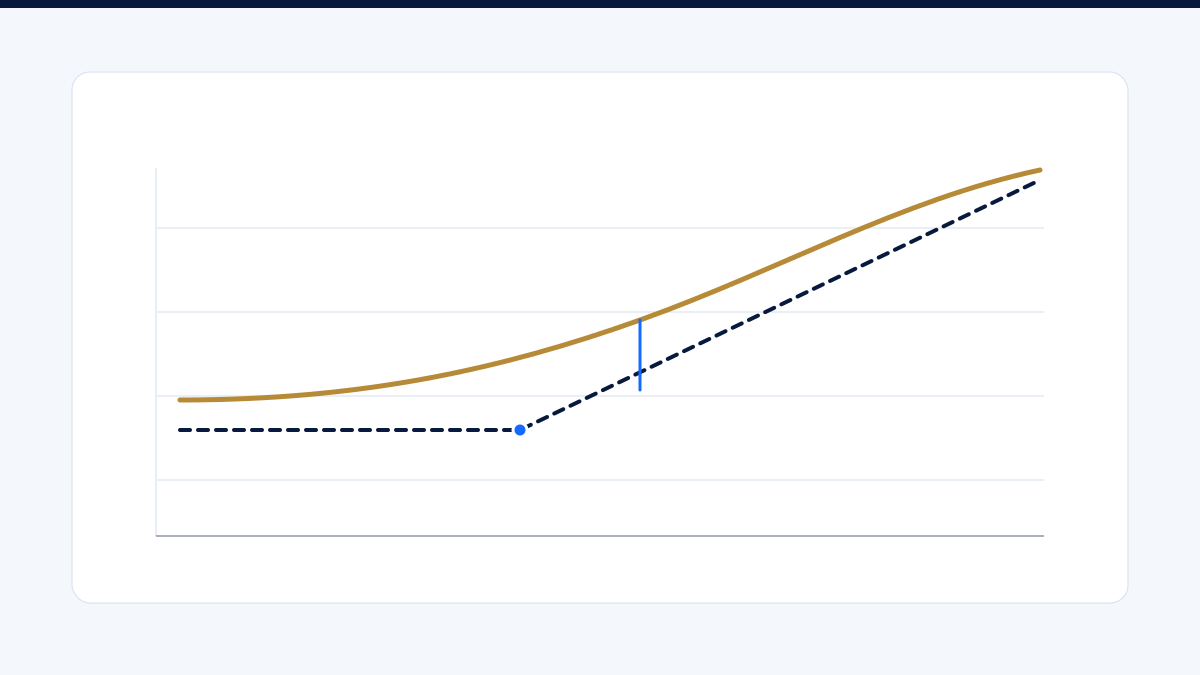
At expiration, a call is worth the greater of zero and the asset price minus the strike, before costs. Before expiration, the premium also includes time and volatility. A payoff chart that ignores that premium is a picture of the end, not of the position you hold today.
Key points
- Intrinsic value is the payoff if the option expired now. Time value is the rest of the premium.
- Greeks are sensitivities of a model price. They are not a forecast.
- Exercise style and assignment can change the position before the diagram’s final day.
What is going on
A long call pays off when the asset finishes above the strike, by that difference, and the buyer has already paid the premium. A long put is the mirror for a fall. Spreads combine these and cap both gain and loss relative to a naked option. American-style exercise can happen before the end. Assignment can turn a short option into a share or futures position. The Options Clearing Corporation and the exchange write the contract terms. The payoff calculator on this site draws an expiry payoff from strikes and premiums you type. It does not know implied volatility.
Why it matters
Suppose a call’s strike is 100 and the asset is 105. Intrinsic value is 5. If the premium is 8, the other 3 is time value. If nothing else changes and time passes, that 3 can decay even while the asset price is unchanged. Implied volatility is the volatility number that, inside a model, matches the premium. A higher premium can mean higher volatility, more time, or a higher asset price. You cannot read which from the premium alone. These prices are a worksheet.
What to watch
Read the expiry, the strike, the multiplier and whether the option is American or European. Watch assignment dates if you are short. The markets page for options is the instrument primer. This note is the reason a payoff diagram is not a valuation.
Risks
Long options can expire worthless, so the premium is lost. Short options can lose more than the premium received. Model Greeks fail when the market gaps. Liquidity in a far strike can make the theoretical price a poor guide to the trade.
Related
Sources and review
Written by: WiT Markets Editorial. Writes and structures WiT Markets pages. Separates a sourced fact from a cell that is Not confirmed.
Review: Editorially reviewed. This is not a qualified specialist review and it is not a legal sign-off.
Last reviewed: . Next review due . The date is an editorial pass. It is not a live check of every third-party fee.
Other sources
- Options Clearing Corporation — checked 13 October 2026
- CME Group — checked 13 October 2026
Methodology. Editorial policy. Corrections. Report an error.