Research
Nuclear fuel risk shows up before the reactor is built
A discussion of nuclear power usually starts with a reactor and a construction timeline. The IEA's minerals outlook starts further up the fuel cycle, and it says the nearer constraint is conversion, not the announcement of a plant. No capacity factor, build cost or gas-price comparison was opened, so none is printed.
Key points
- The IEA says uranium markets have strengthened since 2020 because expected fuel demand requires more supply.
- The top three countries account for almost three-quarters of uranium mining and around 70 percent of conversion and enrichment capacity.
- The summary says the most immediate bottleneck is conversion, where capacity is already tight.
- No reactor cost or capacity factor is stated.
What is going on
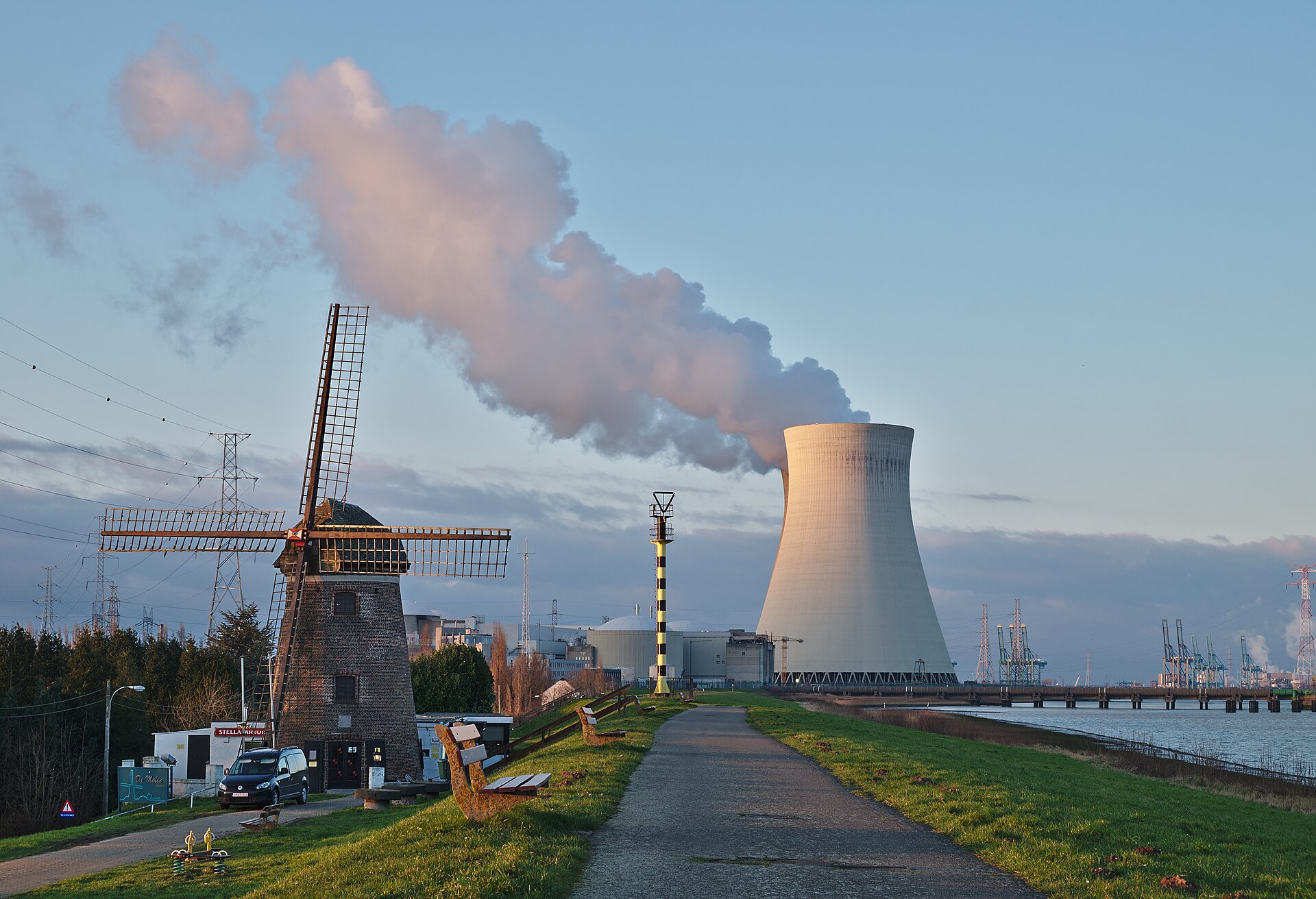
The executive summary says the renewed interest in nuclear power needs investment across the fuel cycle. New mines have to be developed as requirements rise. Conversion is described as the immediate constraint, with enrichment needing to expand over the medium term, including for high-assay low-enriched uranium used in some next-generation reactors. Fabrication for conventional fuel is described as generally adequate, with possible trouble where a design needs a specific product. Concentration is quantified: the top three countries account for almost three-quarters of mining and around 70 percent of conversion and enrichment. The photograph shows a cooling tower and a windmill at Doel. It is a picture of two technologies on one skyline, not a comparison of their costs.
Why it matters
A utility that announces a reactor has not secured conversion or enrichment by making the announcement. Fuel-cycle capacity is a different project, with a different permit and a different customer, often a fuel buyer rather than the plant's equity owner. Concentration at 70 percent means a political or technical outage is a fuel problem even when uranium ore looks available. That is the same shape of risk as mineral refining, applied to a fuel rather than a battery metal.
What to watch
The claim of a conversion bottleneck would weaken if the IEA, or a later official survey, reported spare conversion capacity. The claim of a mining gap would weaken if named projects entered production on the timetable already assumed. Reactor-by-reactor delays are a separate monitor and were not collected for this note.
Risks
Strengthening prices since 2020 can reverse. Enrichment and conversion are specialised and can be delayed by licensing even when capital is available. A plant that needs HALEU depends on a fuel that the summary says must expand, not on a fuel it says is already ample. This note does not rank nuclear against gas or renewables, because it does not have the cost and reliability figures that ranking would require.
Generation choices this note leaves open
Reliability, construction time, financing and grid integration decide how a power system answers demand. They are not in the minerals summary. A later note can use them when a system operator or an energy agency page is actually read. Until then, the published point is narrower: fuel-cycle concentration is already described, and it is not the same fact as a reactor announcement.
Related
Sources and review
Written by: WiT Markets Editorial. Writes and structures WiT Markets pages. Separates a sourced fact from a cell that is Not confirmed.
Review: Editorially reviewed. This is not a qualified specialist review and it is not a legal sign-off.
Last reviewed: . Next review due . The date is an editorial pass. It is not a live check of every third-party fee.
Regulatory and official sources
- IEA Global Critical Minerals Outlook 2026, executive summary — checked 19 October 2026
Methodology. Editorial policy. Corrections. Report an error.