Research
A breakout level is a price on a chart, not a guaranteed fill
A breakout rule buys or sells when price leaves a range. The level is a condition. The fill is whatever the market offers at that moment, which can be through the level or not at all if you require a limit.
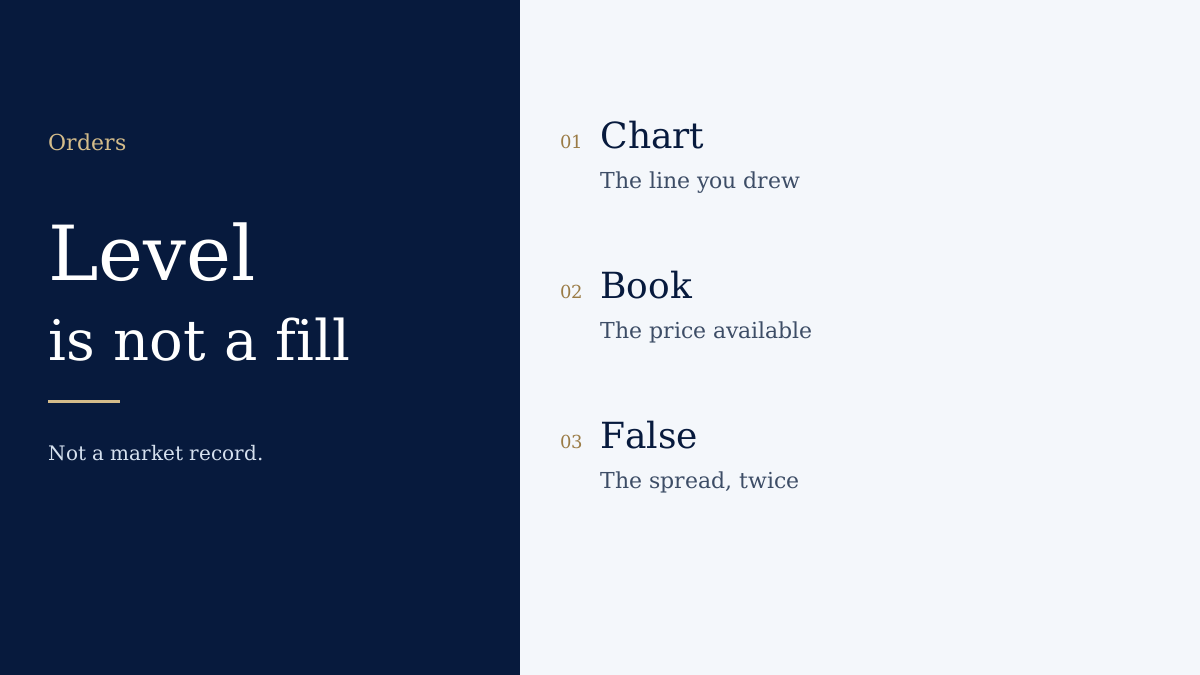
Key points
- A stop or a stop-limit does not promise the price printed on the chart.
- A false break returns inside the range and often pays the spread twice.
- Size the loss from a worse exit than the line you drew.
What is going on
Ranges are prior highs, prior lows, or a compression you defined. A break is a trade at or through that price. In a fast market the next trade can be well beyond it. A stop-market order seeks a fill and accepts the price available. A stop-limit can refuse the fill and leave you without the position, or still in the one you meant to exit. FINRA’s materials on order types describe that difference. They do not describe your chart.
Why it matters
False breaks are the rule’s ordinary failure: the level is touched, the position is opened, and price returns. The loss is the distance back plus costs. A rule that enters on a break and exits only much later is a trend rule. A rule that exits on a return inside the range is closer to a range rule. Name which one you are using before you judge a losing trade as a surprise.
What to watch
Write the level, the order type, the cancel condition and the size. Look at how wide the spread was the last time a similar level broke, as a memory not as a forecast. If the instrument is thin, assume the level is a worse guide to the fill.
Risks
Breaks cluster at news. Liquidity can vanish on the side you need. A level copied from a delayed chart is a different object from the live book. This page does not mark a market’s next break.
Related
Sources and review
Written by: WiT Markets Editorial. Writes and structures WiT Markets pages. Separates a sourced fact from a cell that is Not confirmed.
Review: Editorially reviewed. This is not a qualified specialist review and it is not a legal sign-off.
Last reviewed: . Next review due . The date is an editorial pass. It is not a live check of every third-party fee.
Regulatory and official sources
- Investor.gov — checked 13 October 2026
- FINRA — checked 13 October 2026
Other sources
- WiT Markets methodology — checked 13 October 2026
Methodology. Editorial policy. Corrections. Report an error.