Research
Mean reversion assumes the move will fade
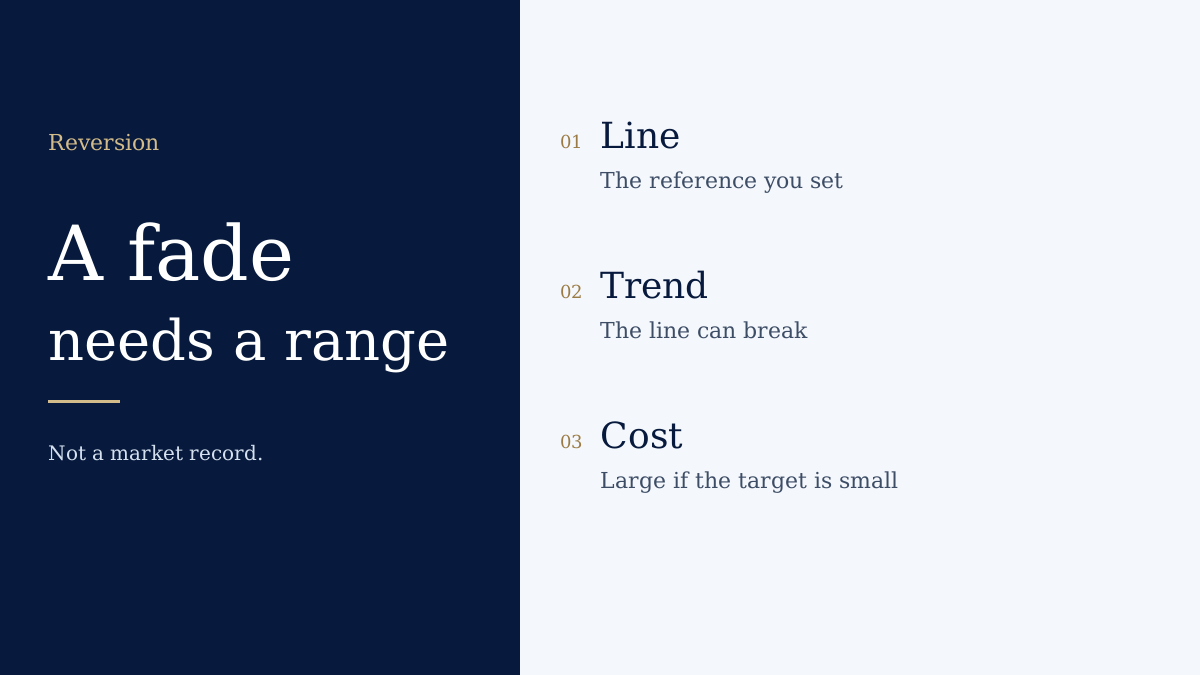
Mean reversion sells strength and buys weakness against a reference you defined. The reference can be a moving average, a band, or a spread. The rule loses when the reference itself is what has changed.
Key points
- Fading a move is the opposite bet from following it.
- Costs matter more when the expected move back is small.
- A tail move is the case the range rule did not size for.
What is going on
A range rule buys below a lower line and sells above an upper line, or it trades a spread back toward a historical gap. The profit, if the fade happens, is the distance back toward the line minus the spread and any commission. If the line was estimated from a calm sample, a new level can look like an extreme that never returns. The position then grows or the stop, if you wrote one, is the only exit.
Why it matters
Small targets and frequent trades make the spread a large share of the plan. A rule that looks profitable before costs can be a loss after them. Adding size because the price is ‘more extreme’ increases the loss if the regime has changed. That is not a more confident version of the same idea. It is more exposure to the failure.
What to watch
Write the reference, the entry distance, the exit, and the loss at which the idea is retired. Include the spread you are willing to assume. Do not add to a losing fade unless that add was in the original rule, with a maximum size.
Risks
Prices can trend. A short-volatility shape, which many fades resemble, earns small amounts and occasionally loses a large one. This note does not show a win rate.
Related
Sources and review
Written by: WiT Markets Editorial. Writes and structures WiT Markets pages. Separates a sourced fact from a cell that is Not confirmed.
Review: Editorially reviewed. This is not a qualified specialist review and it is not a legal sign-off.
Last reviewed: . Next review due . The date is an editorial pass. It is not a live check of every third-party fee.
Regulatory and official sources
- Investor.gov — checked 13 October 2026
Other sources
- WiT Markets methodology — checked 13 October 2026
Methodology. Editorial policy. Corrections. Report an error.