Research
A robot order is not a productivity gain, or a supplier's margin
The IEA's minerals outlook mentions robotics in one precise place: as a reason minor metals such as gallium and indium matter. It does not count robot installations. This note uses that limited evidence and then stays with the economics. An installation statistic would have required the International Federation of Robotics report, which was not opened.
Key points
- The IEA links robotics and semiconductors to demand for minor minerals. It does not publish an installation series.
- The buyer of a machine pays up front. The productivity result, if it arrives, is later and may accrue to the customer.
- No installation count is stated.
What is going on
In the July 2026 executive summary the IEA says semiconductors, robotics and AI increase the importance of minerals such as gallium, germanium, indium and antimony, and that aerospace and defence depend on a different list that includes cobalt, titanium, tungsten and yttrium. That is a demand map for materials. It is not a census of factory robots. The OECD's September 2026 risk, that investment returns fall short of the earnings implied by spending, applies to automation as much as to computing: the machine is the spending, and the earnings are a later test.
Why it matters
Labour scarcity can make a customer willing to buy. Willingness to buy is revenue for the supplier at delivery, and a depreciation charge for the customer for years. Maintenance, integration and downtime sit on the customer's side. If wages were the constraint, a machine that needs scarce technicians has moved the shortage rather than removed it. Measured productivity rises only when output per hour rises. A supplier's margin rises only when price stays above the cost of the next machine, which gets harder if several suppliers chase the same factory budget.
What to watch
Orders, backlog and cancellation rates from a named company's filing would be the commercial evidence. Official productivity statistics would be the economic evidence. A trade-fair anecdote is neither. Mineral prices for gallium are a supply-chain monitor, not a proxy for robot demand, because the metal has other uses and, on the IEA's account, a price that already diverges by region.
Risks
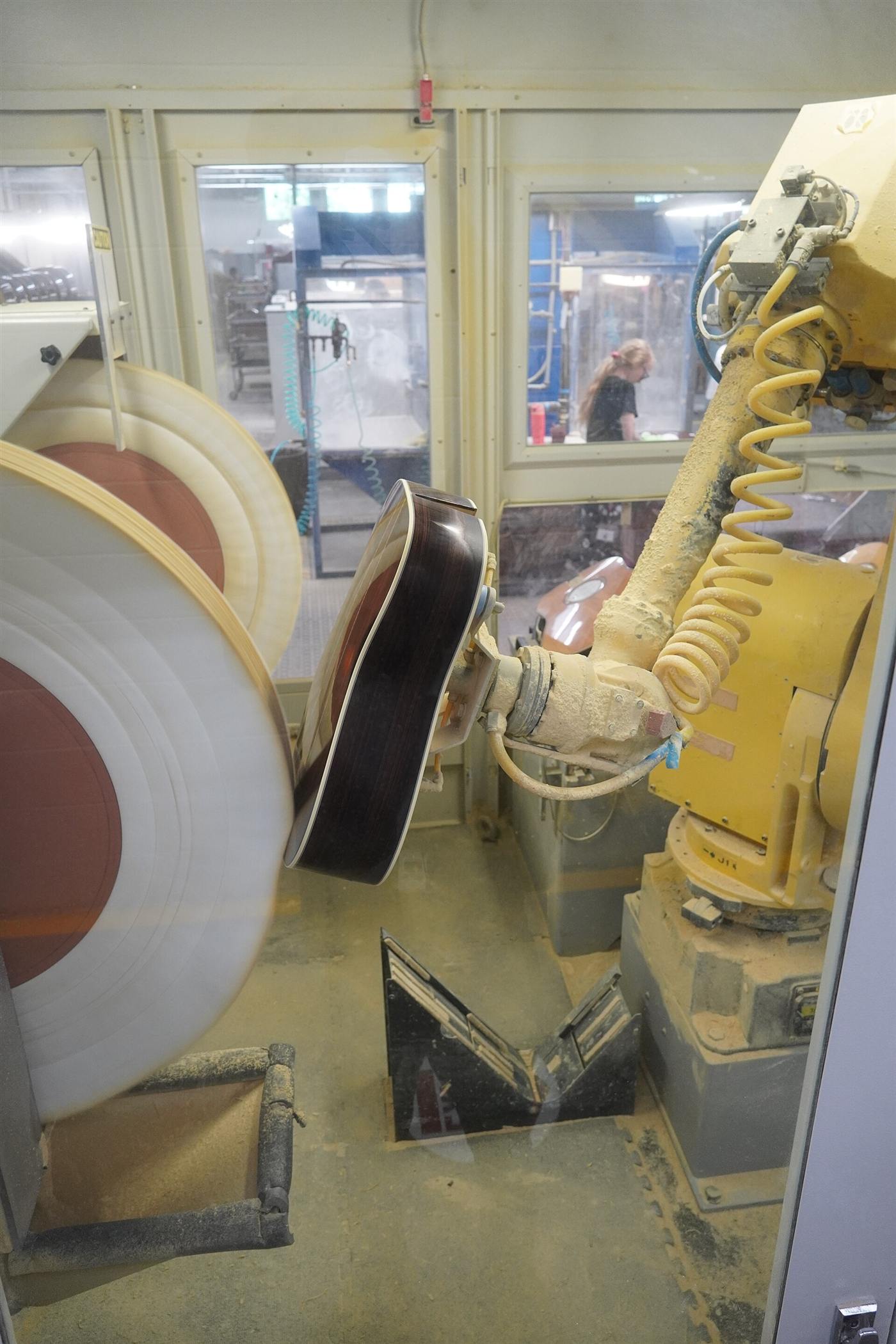
Customers can delay a discretionary machine when financing costs rise. Suppliers can compete the installation margin away. A labour shortage can ease. The photograph on this page is a finishing arm in a guitar factory. It shows a real installation. It does not show a return.
Demand, profit and the statistic
Three ledgers get confused. The customer's problem is hours and wages. The supplier's problem is price, cost and repeat orders. The statistician's problem is output per hour in a survey that may not see the installation for a year. A theme that quotes only the first ledger has not answered whether anyone earns more than the cost of capital.
Related
Sources and review
Written by: WiT Markets Editorial. Writes and structures WiT Markets pages. Separates a sourced fact from a cell that is Not confirmed.
Review: Editorially reviewed. This is not a qualified specialist review and it is not a legal sign-off.
Last reviewed: . Next review due . The date is an editorial pass. It is not a live check of every third-party fee.
Regulatory and official sources
- IEA Global Critical Minerals Outlook 2026, executive summary — checked 19 October 2026
- OECD Economic Outlook interim report, September 2026 — checked 19 October 2026
Other sources
- WiT Markets methodology — checked 13 October 2026
Methodology. Editorial policy. Corrections. Report an error.