Research
A stop is an instruction, not a guaranteed price
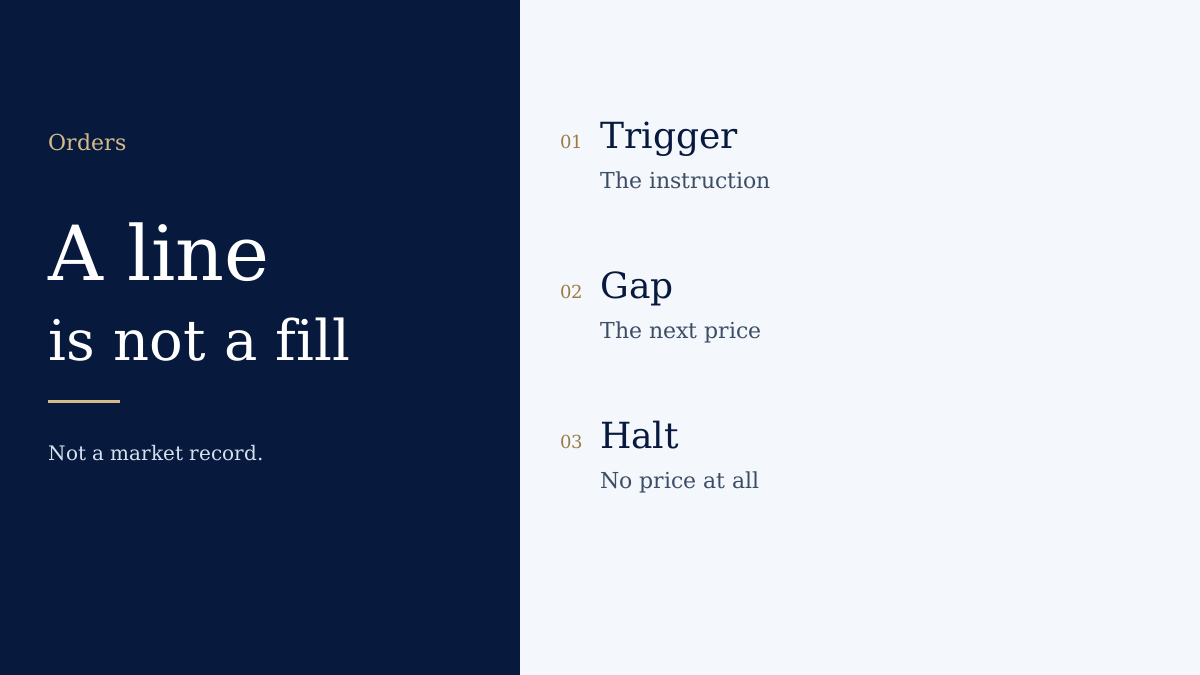
A stop becomes an order when the trigger is touched. The fill is the price then available. In a gap, that price can be far through the line on the chart.
Key points
- Size the loss from a worse exit than the stop, if the stop is a market order.
- A stop-limit can refuse the bad price and leave the position on.
- The stop calculator uses prices you type. It does not promise a fill.
What is going on
FINRA distinguishes stop and stop-limit instructions. A stop-market seeks execution and accepts the available price. A stop-limit adds a limit that can prevent a fill. A trading halt can delay both. The distance in a position-size worksheet is only the loss if the exit happens at that distance. Slippage and gaps are the rest.
Why it matters
A plan that risks one percent assuming the stop fills at the line is a plan about the line, not about the market. Several stops in correlated names can be triggered together, into the same thin book. That is a larger loss than the sum of the quiet worksheets.
What to watch
Write the order type, the trigger, the limit if any, and a worse price you are willing to treat as the planning case. Check the product actually offers that order.
Risks
No wording on this page turns a stop into a guaranteed exit price. A broker’s own close-out can also occur at a price you did not choose.
Related
Sources and review
Written by: WiT Markets Editorial. Writes and structures WiT Markets pages. Separates a sourced fact from a cell that is Not confirmed.
Review: Editorially reviewed. This is not a qualified specialist review and it is not a legal sign-off.
Last reviewed: . Next review due . The date is an editorial pass. It is not a live check of every third-party fee.
Regulatory and official sources
- FINRA — checked 13 October 2026
Other sources
- WiT Markets methodology — checked 13 October 2026
Methodology. Editorial policy. Corrections. Report an error.