Research
Position size follows the loss you are willing to take
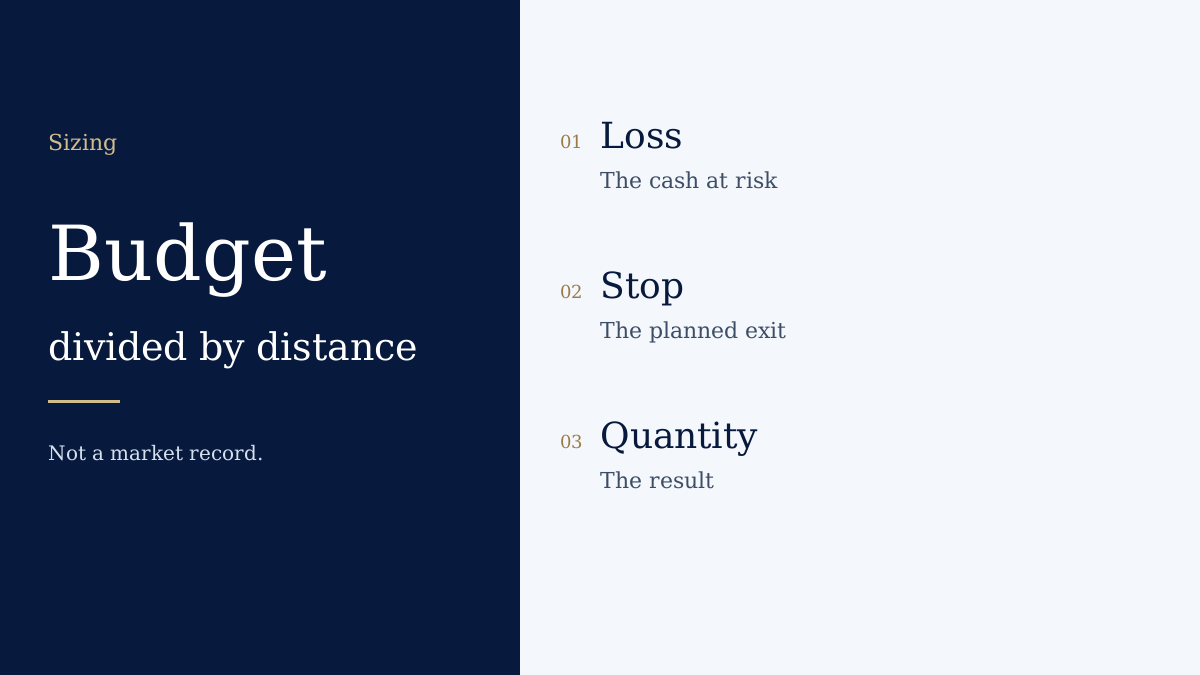
Size is the quantity that makes a wrong exit cost a loss you already accepted. A fixed fraction, a stop distance and a volatility estimate are three ways to write that quantity. They are not three forecasts.
Key points
- The loss if the exit is worse than the plan belongs in the size, not only the loss if the exit is exact.
- A tighter stop is a smaller distance and, for the same loss budget, a larger quantity. The stop can still be jumped.
- The position-size calculator uses an entry, a stop and a risk you type.
What is going on
Fixed-fraction sizing risks a stated share of capital on the idea. Stop-based sizing divides that cash loss by the distance from entry to the exit you wrote, adjusted for the contract size. A volatility estimate replaces the stop distance with a multiple of recent movement. All three can be computed from inputs. None of them knows the next price. A gap through a stop makes the loss larger than the worksheet. Liquidity can do the same if the size you want is larger than the market will take near your price.
Why it matters
A larger quantity with a tighter stop keeps the same cash loss only if the stop fills. If it does not, the tighter rule was an illusion of control. A volatility figure from a quiet window understates the size of a later shock. Correlation matters when several positions can hit their exits together. The calculator can include a slippage assumption you type. It still cannot see the book.
What to watch
Write the capital at risk, the distance, the contract multiplier and the fee. If the exit is a stop, write what kind of order it is and that a gap can pass it. Review the quantity when the capital or the distance changes. Do not treat last year’s calm as the distance.
Risks
Sizing limits the planned loss. It does not limit the loss if you cannot get out, if several positions fail together, or if borrowed exposure forces an exit. This page does not print a correct fraction for every account.
Related
Sources and review
Written by: WiT Markets Editorial. Writes and structures WiT Markets pages. Separates a sourced fact from a cell that is Not confirmed.
Review: Editorially reviewed. This is not a qualified specialist review and it is not a legal sign-off.
Last reviewed: . Next review due . The date is an editorial pass. It is not a live check of every third-party fee.
Regulatory and official sources
- Investor.gov — checked 13 October 2026
Other sources
- WiT Markets methodology — checked 13 October 2026
Methodology. Editorial policy. Corrections. Report an error.