Research
Momentum as a holding and momentum as a signal are different rules
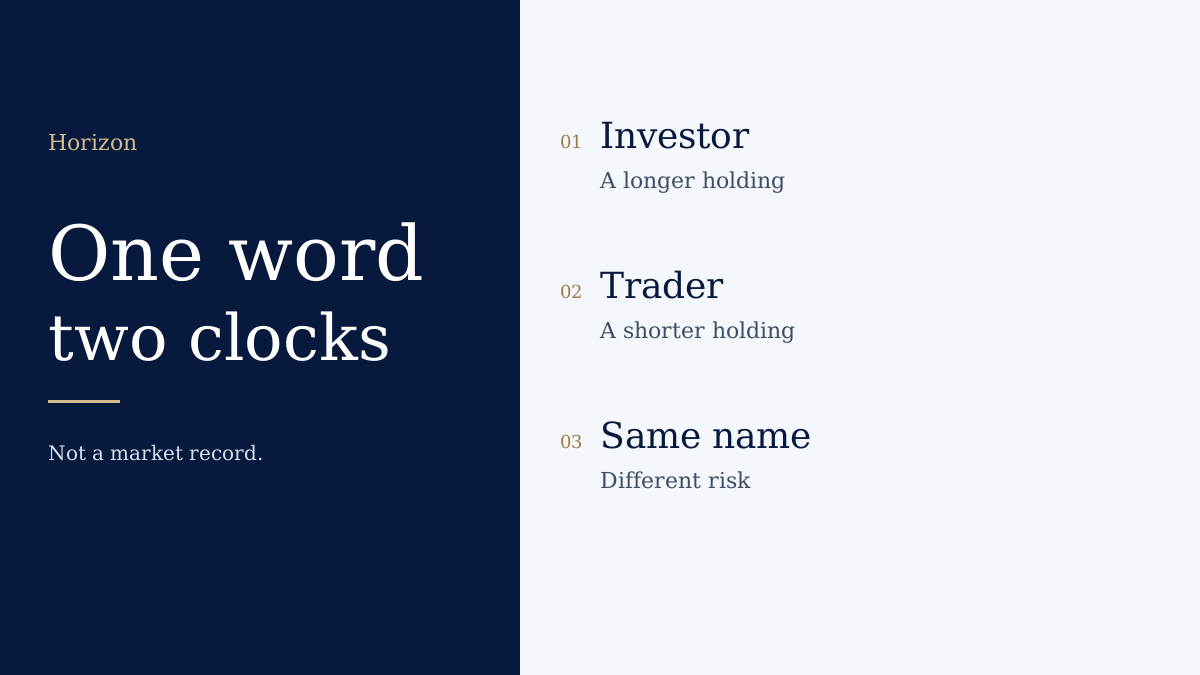
Momentum is a label. One use ranks markets by a past return and holds the leaders for a stated period. Another uses a recent price pattern as an entry that may last days. The research question is which rule you mean.
Key points
- A ranking of past returns is not the same instruction as a chart signal.
- The holding period decides how often costs are paid and how a reversal shows up.
- A shared word is not evidence the two rules have the same result.
What is going on
Cross-sectional momentum sorts a universe by a past window and owns the top of the list until the next sort. Time-series momentum asks whether each market’s own past return is positive and takes that sign. A short-term trading rule may instead buy a break of this week’s high. All three can be called momentum. They rebalance on different clocks, they concentrate in different names, and they pay costs at different rates. A reversal hurts the ranking rule at the next sort and hurts the trading rule at the next bar.
Why it matters
Mixing the evidence for one clock with the implementation of another is how a paper becomes a brochure. Academic results, where they exist, apply to the universe, the window and the costs in that study. This desk is not restating a specific paper’s return. If you cannot name the window, you do not have the rule.
What to watch
Write the universe, the window, the holding period and whether the rule is allowed to be short. Write the cost per rebalance. A ranking that ignores a name you cannot trade is a different portfolio from the one in the study.
Risks
Leaders can reverse together. A crowded exit is a liquidity event, not a smooth rebalance. This page does not publish a momentum return.
Related
Sources and review
Written by: WiT Markets Editorial. Writes and structures WiT Markets pages. Separates a sourced fact from a cell that is Not confirmed.
Review: Editorially reviewed. This is not a qualified specialist review and it is not a legal sign-off.
Last reviewed: . Next review due . The date is an editorial pass. It is not a live check of every third-party fee.
Regulatory and official sources
- Investor.gov — checked 13 October 2026
Other sources
- WiT Markets methodology — checked 13 October 2026
Methodology. Editorial policy. Corrections. Report an error.