Research
A risk budget is a decision about what may dominate the account
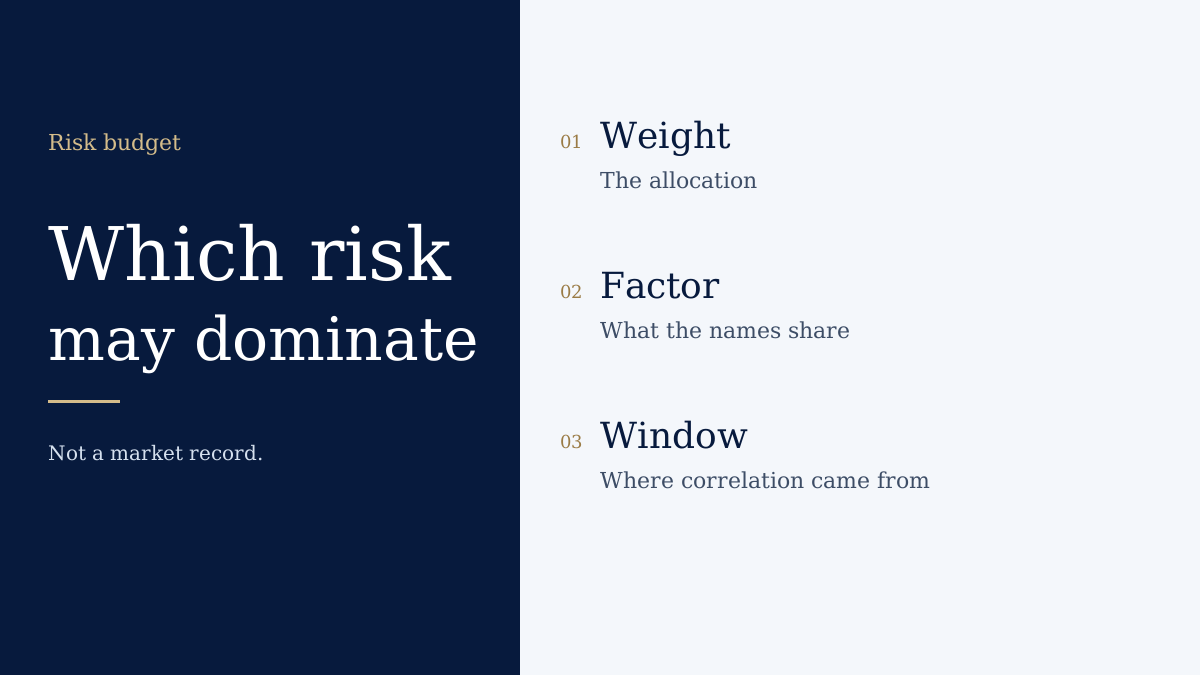
Portfolio construction decides which risks are large. Equal weights, a volatility scale and a risk budget are different decisions. Correlation estimated from a quiet window will not describe a week when those risks move together.
Key points
- Diversification reduces dependence on one risk. It does not remove losses.
- A volatility target changes weights as estimates change. It is not a cap on the next loss.
- Concentration is what remains when one name, sector, or currency is the account.
What is going on
Strategic allocation sets target weights and keeps them with a rebalance rule. A risk budget assigns how much of the portfolio’s variation may come from each holding, often using a volatility estimate and a correlation matrix. Volatility targeting scales the whole book so a recent volatility estimate matches a level you chose. All of these use inputs from a window. Change the window and the weights change. Investor.gov describes diversification as a way to spread risk, not as a promise against loss.
Why it matters
A portfolio can be diversified by name and concentrated by factor. Several funds can share the same large holdings. Currency exposure can dominate a foreign-asset weight that looked modest in the home currency. Liquidity risk and counterparty risk do not appear in a returns correlation. A drawdown chart of the past is a description of that past. The recovery calculator tells you the gain required to get back to a peak you type. It does not say the gain will arrive.
What to watch
Write the targets, the window used for any volatility or correlation figure, and the holding that would worry you if correlations went to one. Include cash and currency as holdings, not as a footnote. Rebalance rules belong in the same document.
Risks
Estimates break. A stress that was not in the window can be the one that matters. This page does not print an efficient frontier or a forecast volatility.
Related
Sources and review
Written by: WiT Markets Editorial. Writes and structures WiT Markets pages. Separates a sourced fact from a cell that is Not confirmed.
Review: Editorially reviewed. This is not a qualified specialist review and it is not a legal sign-off.
Last reviewed: . Next review due . The date is an editorial pass. It is not a live check of every third-party fee.
Regulatory and official sources
- Investor.gov — checked 13 October 2026
Other sources
- WiT Markets methodology — checked 13 October 2026
Methodology. Editorial policy. Corrections. Report an error.