Research
A listed venue and a bilateral book are different access
Market access is the set of contracts an entity will actually accept for you. A shared asset-class label, including gold or a stock index, does not mean the same venue or the same counterparty.
Key points
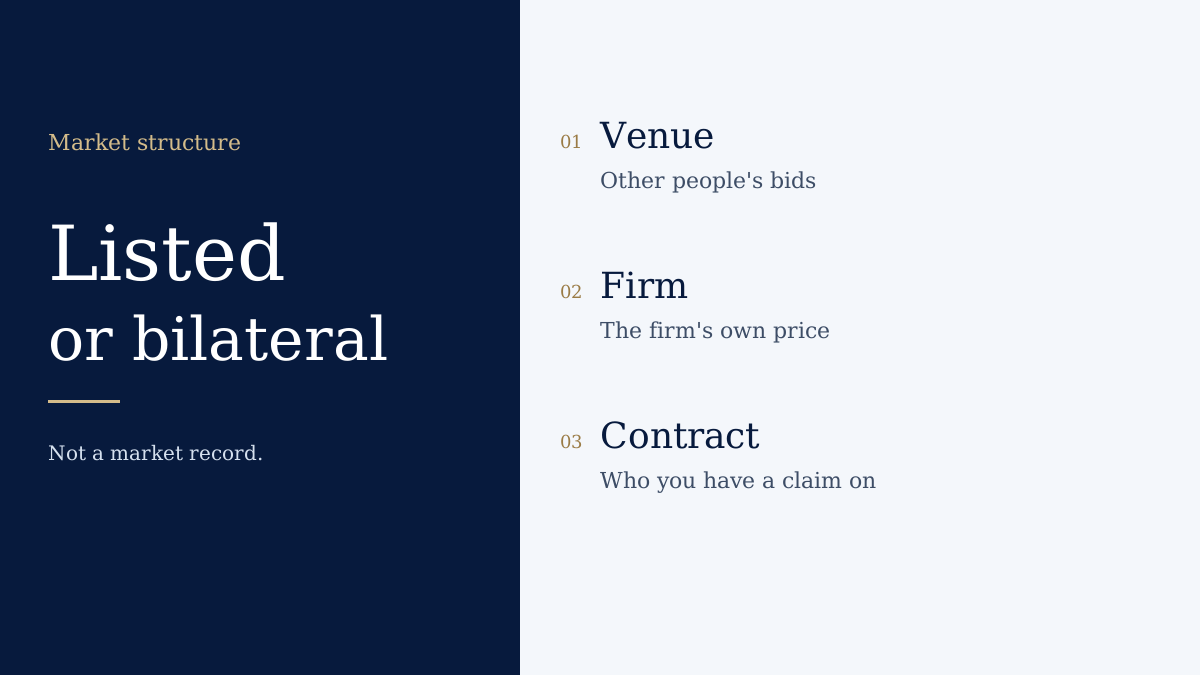
- A listed contract is an exchange instrument. A bilateral contract is with the firm.
- Two firms can both say a market is available and still list different venues and contracts.
- A marketing category is not an inventory of permissions.
What is going on
Exchange-listed shares, funds and derivatives are admitted to a venue, with that venue’s rules. An introducing arrangement can place a client with a clearing firm rather than giving the client a membership. Over-the-counter contracts, including many foreign-exchange and contract-for-difference accounts, make the provider the counterparty. The SEC, the CFTC and the FCA describe those structures in different statutes. CME Group’s contract specifications are an example of a venue document that a brochure does not replace.
Why it matters
One firm’s listed gold contract and another firm’s gold contract with the firm itself can move differently, expire differently and fail differently. One firm’s derivatives permission can include a single venue. Another can include several, or only a subset of contracts, or only the data and not the order.
What to watch
Ask for the venue or the counterparty, the contract or product code, and whether your classification is allowed to trade it. Do not infer the list from the asset-class name.
Risks
Permissions and product lists change. This note does not state that any named provider offers a named contract.
Related
Sources and review
Written by: WiT Markets Editorial. Writes and structures WiT Markets pages. Separates a sourced fact from a cell that is Not confirmed.
Review: Editorially reviewed. This is not a qualified specialist review and it is not a legal sign-off.
Last reviewed: . Next review due . The date is an editorial pass. It is not a live check of every third-party fee.
Regulatory and official sources
- U.S. Securities and Exchange Commission — checked 13 October 2026
- U.S. Commodity Futures Trading Commission — checked 14 October 2026
- Financial Conduct Authority — checked 13 October 2026
Other sources
- CME Group — checked 13 October 2026
- WiT Markets methodology — checked 13 October 2026
Methodology. Editorial policy. Corrections. Report an error.