Research
Collateral can force an exit before the idea is resolved
A listed contract can require cash at the start and more cash if the mark moves against you. The amount is on the venue’s specification and the firm’s house rule. This note explains the mechanism and does not quote today’s figure.
Key points
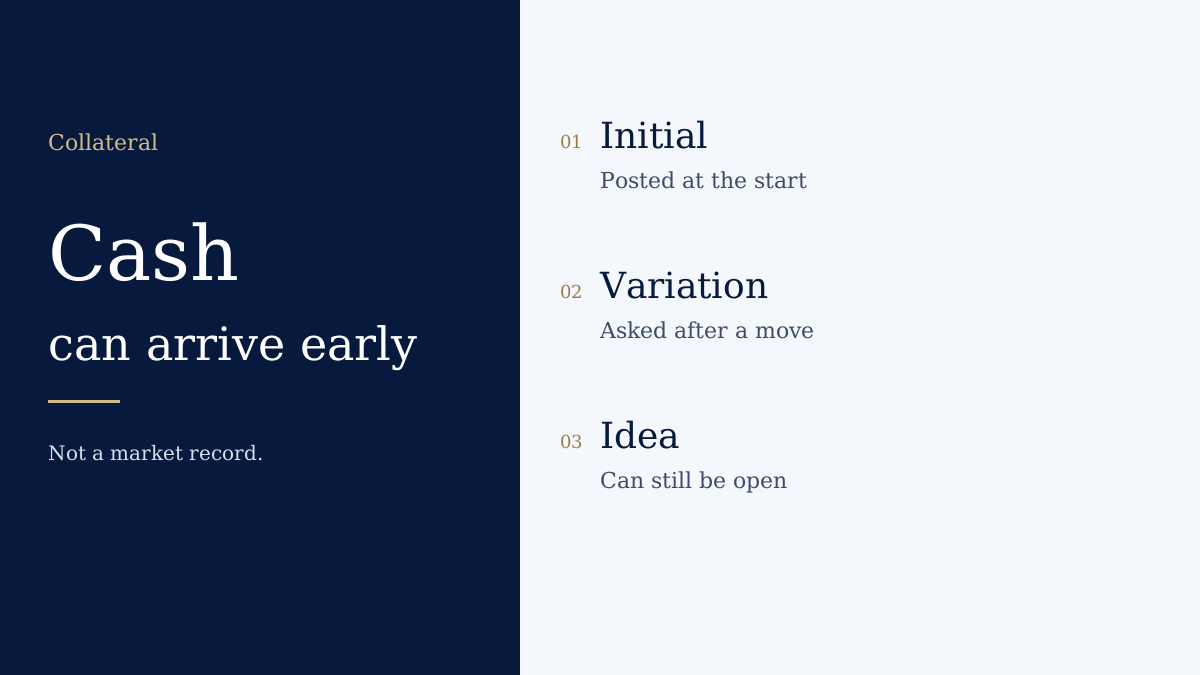
- Initial and maintenance levels are rules about cash, not about the merit of the idea.
- A house requirement can be higher than the venue minimum.
- The futures calculator uses a size you type.
What is going on
CME and the CFTC publish how listed contracts and intermediaries handle collateral and close-out. A mark-to-market loss can demand variation cash during the life of the trade. If the cash is not there, the position can be reduced. Price limits and expiry change what ‘the price’ means on a given day. Delivery rules decide whether you must exit. None of those documents is copied into a number here, because the number changes and this page has not re-read a live schedule.
Why it matters
The risk is a timetable. The thesis can still be intact when the cash demand arrives. A hedge can be closed by the collateral rule even though the exposure it was meant to offset remains. That is a different failure from the price simply going the wrong way.
What to watch
Read the contract’s specification for the multiplier and the current collateral notice for the amount. Write the cash you can post. Do not infer either figure from a ticker.
Risks
A gap through a limit, or a raise in the requirement, can make the worksheet obsolete overnight. This page is not a liquidation engine.
Related
Sources and review
Written by: WiT Markets Editorial. Writes and structures WiT Markets pages. Separates a sourced fact from a cell that is Not confirmed.
Review: Editorially reviewed. This is not a qualified specialist review and it is not a legal sign-off.
Last reviewed: . Next review due . The date is an editorial pass. It is not a live check of every third-party fee.
Regulatory and official sources
- U.S. Commodity Futures Trading Commission — checked 14 October 2026
- National Futures Association — checked 14 October 2026
Other sources
- CME Group — checked 13 October 2026
- WiT Markets methodology — checked 13 October 2026
Methodology. Editorial policy. Corrections. Report an error.