Research
A calendar and a band are different instructions to trade
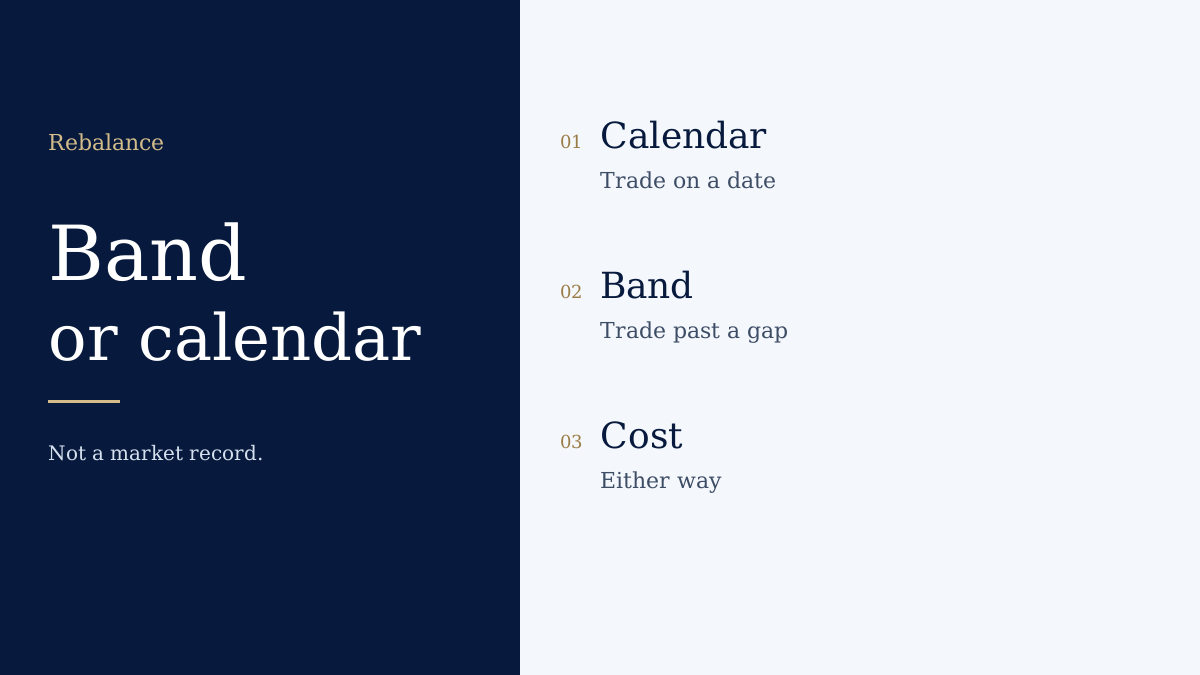
Rebalancing pulls weights toward targets you set earlier. A calendar does it on a date. A band does it when a weight leaves a range. New cash can do some of the work without a sale. None of these is a view on which asset will lead next.
Key points
- A date rule and a width rule trade at different times, so they incur costs on different paths.
- Letting contributions fill the underweight holding avoids a sale until the band is still breached.
- The rebalancing calculator uses weights you type. It does not predict the next winner.
What is going on
After prices move, weights drift. A calendar rule trades back to target on a schedule even if the drift is small. A band rule waits until a holding is outside a range you wrote down, then trades. Contribution-only rebalancing sends new money at the holdings that are light and sells nothing until that is not enough. Each rule can leave different weights in place between trades. Costs are the spread, any commission, and the number of tickets.
Why it matters
A tight band trades more often. A wide band lets a winner become a larger share of the account for longer. A calendar can trade when nothing important has changed, and it can also wait through a large drift if the date is far away. Taxes, where they apply, depend on the account and the jurisdiction. This note does not calculate a tax. The tool shows the gap between weights you enter and targets you enter.
What to watch
Write the targets, the band or the date, and whether sales are allowed. Include a minimum trade size so a tiny drift does not become a ticket. Whole units may leave a residual gap. That gap is part of the result, not a failure of the arithmetic.
Risks
Rebalancing can sell a holding that keeps rising and buy one that keeps falling. That is the rule being followed, not a timing success. Correlation can rise and the mix can fall together even when the weights match the page.
Related
Sources and review
Written by: WiT Markets Editorial. Writes and structures WiT Markets pages. Separates a sourced fact from a cell that is Not confirmed.
Review: Editorially reviewed. This is not a qualified specialist review and it is not a legal sign-off.
Last reviewed: . Next review due . The date is an editorial pass. It is not a live check of every third-party fee.
Regulatory and official sources
- Investor.gov — checked 13 October 2026
Other sources
- WiT Markets methodology — checked 13 October 2026
Methodology. Editorial policy. Corrections. Report an error.