Multi-asset investment research
Asset Class Research
Understand what drives returns, risk and value across financial markets.
Explore original research on equities, ETFs, bonds, commodities, currencies, derivatives and alternative investments. Understand how each asset works, what determines its returns and how different exposures behave under changing market conditions. Figures appear only when a document was read, or when an example is labelled as a worksheet.
Featured research
The lead note uses the September 2026 BIS review. The cards beside it are mechanism notes with worksheet arithmetic where a number appears.
AlternativesMacro analysis
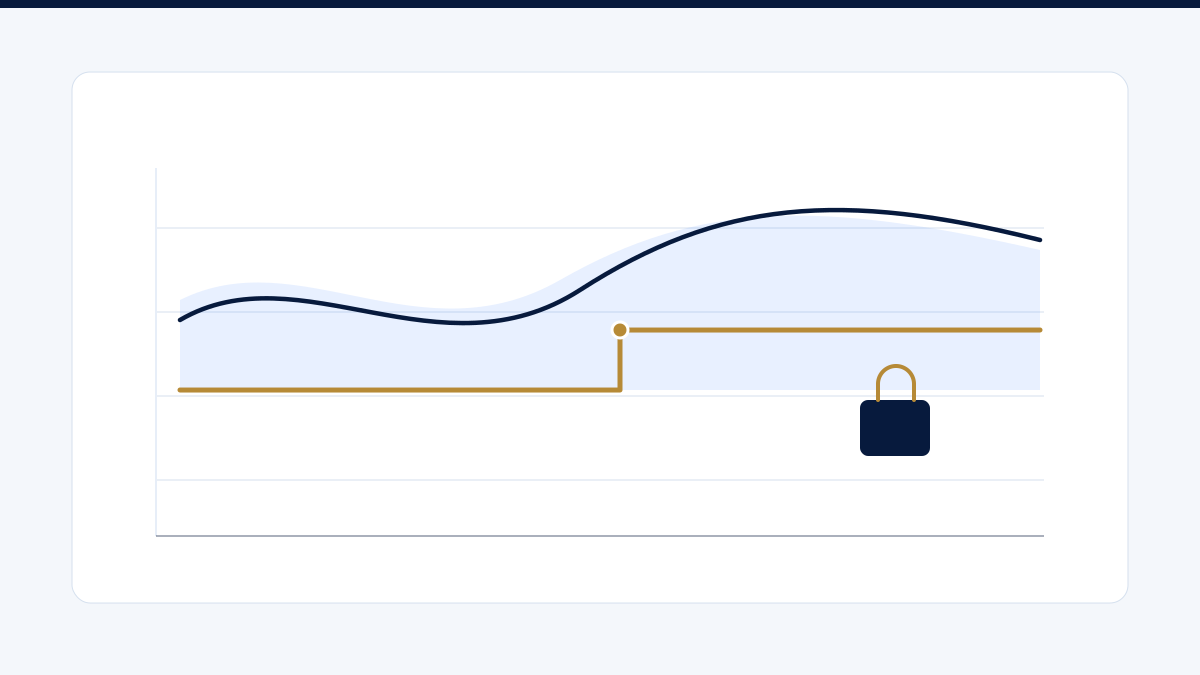
Private credit and the risks hidden in an illiquid valuation
Private credit is a loan that does not trade like a government bond. The September 2026 BIS Quarterly Review says it helped finance the shift toward the digital economy by lending against cash flows and intangible assets. A valuation that barely moves is not the same fact as a market price.
Read the note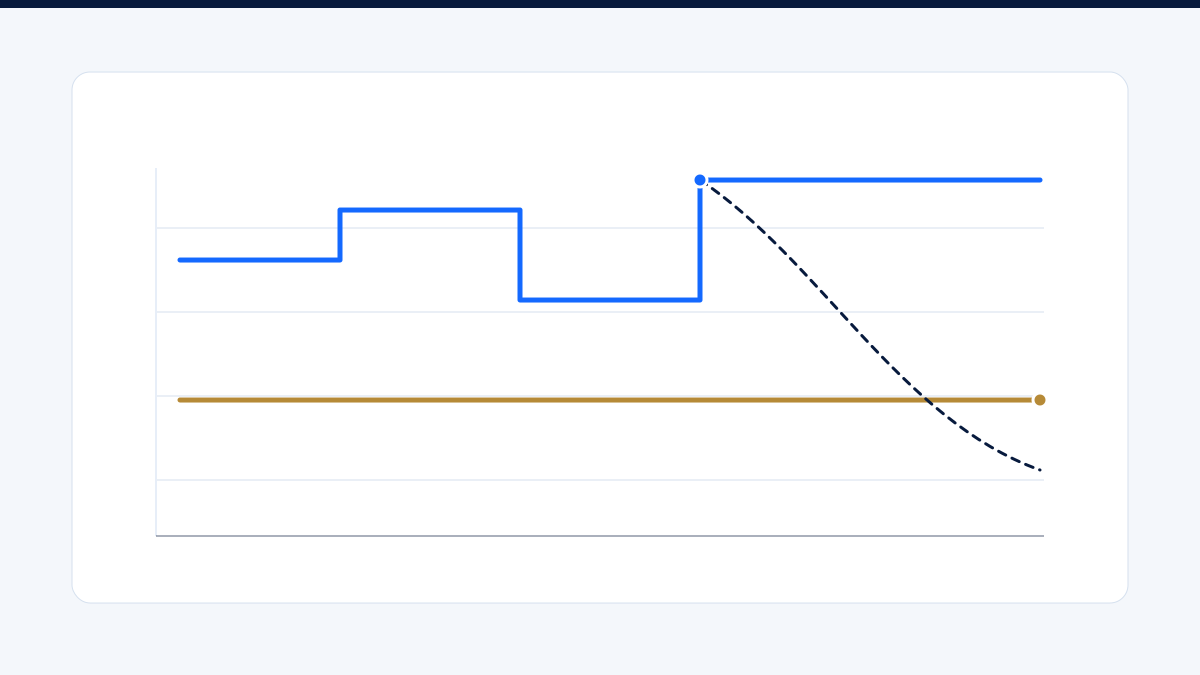
Fixed income
Floating-rate bonds and fixed-rate bonds do not share one interest-rate risk
How coupon resets, duration and credit spreads differ, with a hypothetical price illustration.
ETFs and funds
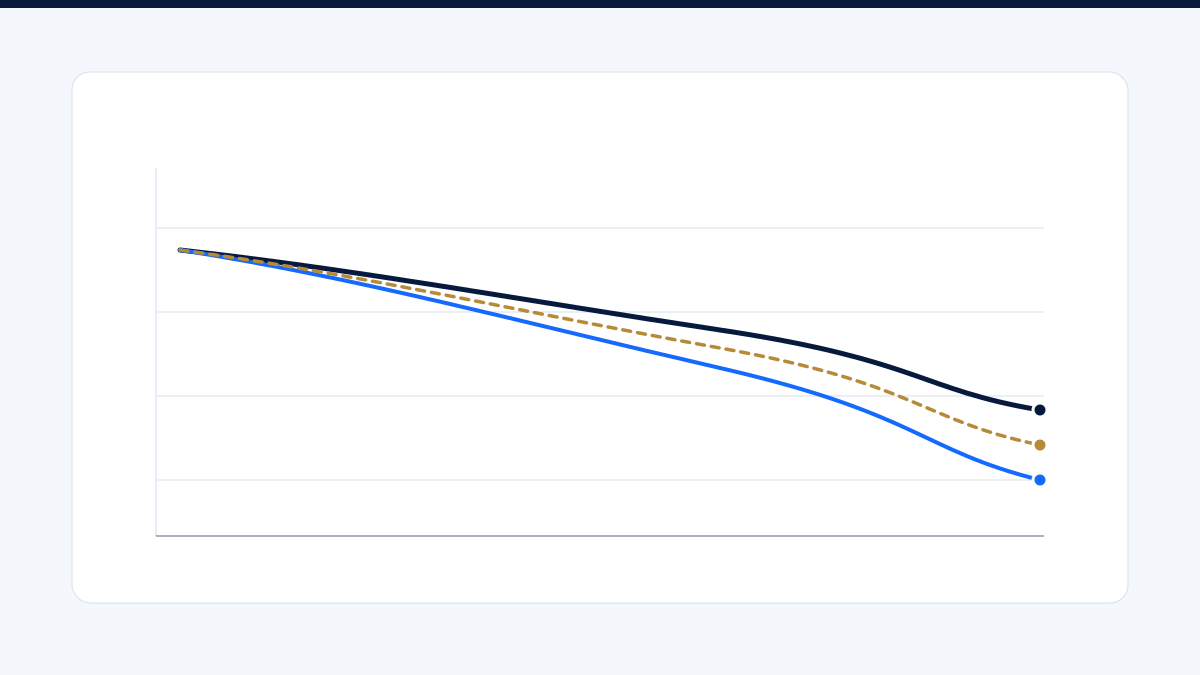
Why two ETFs tracking the same index can deliver different returns
Fees, taxes, replication, lending, hedging and the gap between the fund and its index. No reprinted industry total.
Commodities
Gold, oil and copper do not share one inflation story
Why monetary demand, industrial use and producer economics stop these commodities being interchangeable hedges.
Asset classes
Counts are published notes carrying that tag, including earlier notes that still live at their own addresses.
Equities
A residual claim on a business.
Return. Earnings, dividends and the price paid for them.
Risk. The business, dilution and a multiple that compresses the filing.
6 published notes
Filter the archiveETFs and funds
A portfolio with a fee and a domicile.
Return. The holdings’ return, minus costs and tracking effects.
Risk. The wrong index, a tax drag, or a price away from net asset value.
7 published notes
Filter the archiveFixed income
A schedule of coupons and principal, plus a credit.
Return. Income and the price change when yields or spreads move.
Risk. Duration, default and a yield definition that is not the one you meant.
6 published notes
Filter the archiveCommodities
A good, a futures curve, or a producer’s equity.
Return. Spot, the roll and, for a miner, the spread over costs.
Risk. Treating gold, oil and copper, or a fund and a mine, as the same holding.
4 published notes
Filter the archiveCurrencies
An exchange rate, or the translation of a foreign asset.
Return. The rate and any interest differential.
Risk. Confusing a hedged share class with a currency trade.
1 published note
Filter the archiveFutures
A dated contract and collateral.
Return. The contract price, the roll and the collateral return.
Risk. Margin is not a cap on loss. Expiry ends that contract.
1 published note
Filter the archiveOptions
A right or an obligation at a strike.
Return. The payoff after the premium. Before expiry, time and volatility.
Risk. Reading an expiry diagram as the value of the option today.
1 published note
Filter the archiveDigital assets
A token, an exchange balance, or a listed wrapper.
Return. The token’s result, minus fees and custody frictions.
Risk. Keys, a custodian, or a share price that leaves the tokens.
1 published note
Filter the archiveAlternative and private assets
A contract that may not have a daily price.
Return. The contractual cash flows, if they are paid.
Risk. A smooth valuation, a gate on redemptions, and collateral that is hard to sell.
2 published notes
Filter the archive
Compare asset classes
Instrument-specific descriptions. There is no forecast and no universal risk score. A bill and a long bond do not share a cell.
| Exposure | What is owned | Return drivers | Interest rates | Credit | Liquidity | Currency | Leverage | Structural point |
|---|---|---|---|---|---|---|---|---|
| Listed equity | Residual claim on a company | Earnings, dividends, valuation | Through the discount rate | The firm’s own survival | The share’s market | If the listing or the business is foreign | If the holder borrows | Dilution and a single business |
| Broad equity fund | Shares in a fund that holds equities | Basket return minus costs | Through the holdings’ valuations | Little, unless the fund uses a swap | Fund shares and the basket | Unhedged foreign holdings | Only if the fund is leveraged | Index concentration and tracking |
| Treasury bill | Short government obligation | Yield to a near maturity | Small, because cash is near | The state, usually limited | The bill market | If the bill is in another currency | No, if fully paid | Reinvestment and inflation |
| Long government bond | Long government cash flows | Coupon and yield moves | High duration | The state | Depends on the issue | If foreign currency | If financed | A yield rise can exceed a year of coupon |
| Corporate floater | Company debt with a resetting coupon | Reset income and the spread | Low to the reference rate | The company | Often thinner than bills | If foreign currency | No, if fully paid | Spread widening and default |
| Commodity futures fund | Shares in a rolling futures book | Futures, roll, collateral | Indirect | The fund structure, not the metal’s issuer | Contracts and fund shares | Quote currency versus the holder | Margin inside the book | Curve shape and roll cost |
| Listed option | A contract with a strike and an expiry | Payoff after premium | Via the underlying and rates | The clearing house and the writer | The listed series | If the underlying is foreign | Premium is smaller than the asset | Expiry, volatility and assignment |
What are you actually exposed to?
Choose a holding. The panel is a definition, not a score.
- Economic exposure
- A basket following an index’s rules, not ‘the economy’.
- Return mechanism
- The basket’s total return, minus fees and tracking effects.
- Costs
- Ongoing charge, spread, and sometimes withholding tax.
- Risks
- Market risk plus concentration inside the index.
- Liquidity
- The fund’s shares and the liquidity of the basket.
- Leverage
- Not from the fund itself unless the documents say it is leveraged.
How a risk travels
Mechanisms. No historical price series is drawn, because none was loaded for this page.
Interest rates and bond prices
A higher required yield discounts the same coupons more heavily, so the price falls. The further the cash flows, the larger that effect. A floating coupon resets, which is a different mechanism.
Credit spreads
If lenders demand more spread while government yields are unchanged, corporate prices can fall on their own. A government rally and a credit decline can happen on the same day.
Equity valuation
The same expected cash flows are worth less at a higher discount rate, and worth less per share if the company issues shares. Earnings that are not cash do not survive that arithmetic unchanged.
Futures rolls
Keeping a position past expiry means leaving one contract and entering a later one. If the later contract is priced higher, the roll can cost. Spot can be unchanged while the fund is not.
Currency translation
An asset priced in euros changes in dollar accounts when the exchange rate changes, even if the euro price does not. A hedged share class tries to offset that translation. It does not repair the asset.
Options before expiry
At expiry a call is worth the asset price above the strike, or zero. Before expiry the premium also pays for time and volatility. The payoff diagram is the last line, not the holding today.
Research series
A series is shown only when at least one published note carries its tag.
Understanding equity valuation
Multiples, cash flow and the discount rate.
3 notes
Open in the archiveETF structure, costs and tracking
Why two funds on one index can differ.
3 notes
Open in the archiveFixed income and interest-rate risk
Bills, duration, floaters and credit.
4 notes
Open in the archiveCommodity market structure
The good, the curve and the vehicle.
3 notes
Open in the archiveCurrency exposure and hedging
Translation, forwards and a retail contract.
1 note
Open in the archiveFutures mechanics
Shape, collateral and the roll.
1 note
Open in the archiveOptions before expiry
Premium, time value and the payoff at the end.
1 note
Open in the archiveDigital-asset risk
Custody and the wrapper.
1 note
Open in the archiveAlternatives and liquidity
Private credit and illiquid value.
1 note
Open in the archivePortfolio construction
Common shocks and weights.
1 note
Open in the archive
Editorial queue
These pieces were not published. The source page did not yield a figure that could be checked.
Active versus passive in the 2026 SPIVA scorecards
The S&P Dow Jones SPIVA pages did not load on 19 October 2026, so no underperformance percentage, region or fund category result is stated.
Current weights inside capitalisation-weighted indices
No index factsheet was opened for a holdings weight. The existing concentration note explains the mechanism and does not invent a top-ten share.
ICI fact-book expense ratios and fund flows
The ICI statistics page points to the Fact Book and asks for permission before reproduction. It did not itself print an expense ratio or a flow, so none is copied here.
Research archive
Notes on this hub, including earlier articles that keep their own addresses. Dates are publication dates of the notes.
Asset Class ResearchEconomic explainer
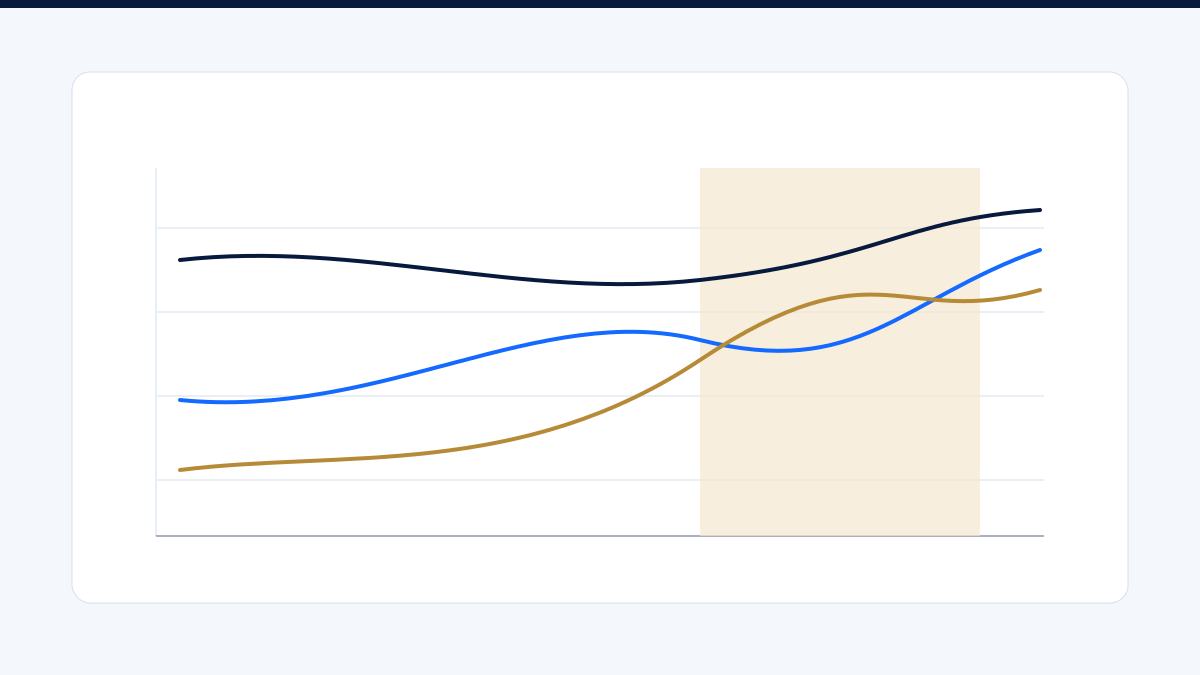
Diversification fails when the assets share a shock
Correlation, concentration and why a calm history is not a promise about the next stress.
Read note
Markets, tools and related research
Existing routes. A calculator uses numbers you type.
Sources and editorial method
Equities and funds
Fundamental analysis reads the business: revenue, earnings quality, cash flow, the balance sheet, dilution and the dividend policy. Valuation multiples compress that reading and can hide it. Sector labels help only when the companies share an economics. An exchange-traded fund or other fund adds a layer: the index rules, the fee, securities lending, and the gap between the fund and the index. The equity note on multiples and the note on index concentration are the published pieces. Company pages are not invented to fill a coverage list.
Bonds, commodities and currencies
Fixed income is a claim on coupons and principal, with interest-rate risk and credit risk that should be named separately. Commodities research starts from supply, demand, inventories and storage, then from the futures curve. Contango and backwardation are shapes of that curve. Weather and energy demand show up as inventory stories. Currencies research has to keep the Bank for International Settlements survey apart from a retail contract. The published foreign-exchange note does that. This hub does not restate it as if a new survey had been released.
Futures, options and wrapped exposures
A future has a multiplier, an expiry and a margin that the exchange or the broker can change. Rollover is a new contract, not a magic continuation of the old price. An option has a strike, a premium and a payoff that is only fully known at expiry. Greeks are sensitivities of a model price. They are not facts about the next trade. Assignment can turn an option position into a share or futures position overnight. Digital assets add custody: an exchange balance, a self-hosted wallet and a listed product fail in different ways. The markets pages carry the instrument primers and the provider directories. Use those for access. Use these notes for the analysis.
MethodologyEditorial policyCommercial disclosureCorrections
Sources and review
Written by: WiT Markets Editorial. Writes and structures WiT Markets pages. Separates a sourced fact from a cell that is Not confirmed.
Review: Editorially reviewed. This is not a qualified specialist review and it is not a legal sign-off.
Last reviewed: . Next review due . The date is an editorial pass. It is not a live check of every third-party fee.
Regulatory and official sources
- Investor.gov — checked 13 October 2026
- U.S. Securities and Exchange Commission — checked 13 October 2026
- BIS Quarterly Review, September 2026 — checked 19 October 2026
- ESMA Trends, Risks and Vulnerabilities Report, No. 1, 2026 — checked 19 October 2026
- Investment Company Institute statistics — checked 19 October 2026
Other sources
- CME Group — checked 13 October 2026
- Options Clearing Corporation — checked 13 October 2026
- WiT Markets methodology — checked 13 October 2026
Methodology. Editorial policy. Corrections. Report an error.